
What Wide-Temperature Operation Means for a TFT LCD
A wide-temperature TFT LCD must operate reliably across the temperatures experienced by the complete device, not just the air around it. LCD response, backlight output, driver electronics, adhesives, touch components, and enclosure heat all influence startup and sustained performance. Engineers should define the real thermal profile first, then confirm each component and the assembled display against it.
Temperature limits are component-specific and may differ for operation, storage, and startup. The display assembly should be evaluated as a system with its actual duty cycle and mounting conditions.
Check the panel, backlight, and electronics as separate limits
The LCD cell, LED backlight, driver circuitry, timing controller, polarizers, and any touch sensor can have different operating constraints. A panel’s stated range does not automatically establish the range of a finished module or the host product. At higher temperatures, backlight and enclosure heat can become limiting; at lower temperatures, liquid-crystal response and startup behavior may change. Review the documentation for the exact module and related components, and ask suppliers to clarify which limits apply to continuous operation and which apply only to storage or non-operating exposure.
Consider cold startup and hot steady-state behavior
Cold operation can affect response time, image transitions, and the interval before the display reaches its normal behavior. In hot conditions, a sealed enclosure may retain heat from the backlight, processor, or nearby power electronics. These effects depend on the design, so avoid assuming one test result represents every installation. Define when the screen must become readable after power-on, how long it runs, whether brightness changes over time, and whether the product is exposed to rapid temperature changes. Those requirements help determine the appropriate validation sequence.
How to Select a Wide-Temperature Industrial Display
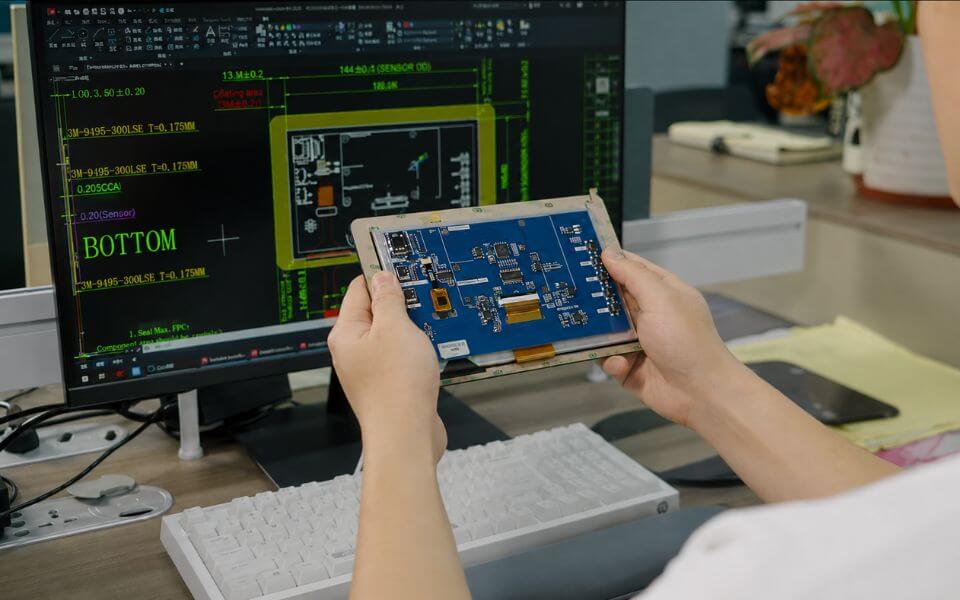
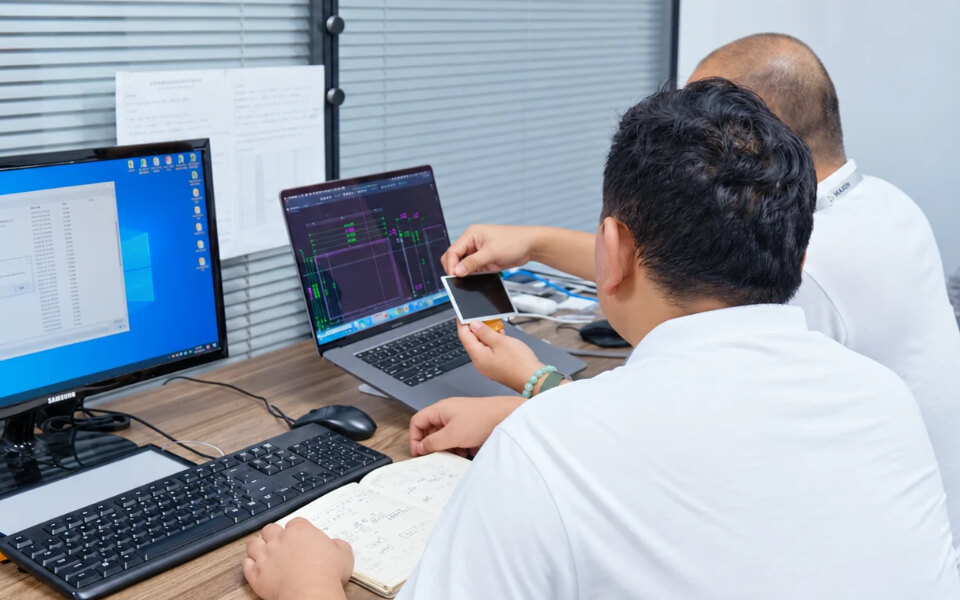
Translate the customer’s operating scenario into component requirements and a practical qualification plan. A production-intent assembly test is essential when the display is mounted in a thermally constrained product.
Define temperature at the display location
Specify the expected minimum and maximum temperatures at the module, including startup conditions, dwell time, transitions, and operating duty cycle. Account for solar loading, enclosure sealing, internal heat sources, airflow, mounting contact, and installation orientation. Also identify storage and transport conditions separately from powered operation. If the display includes touch, optical bonding, or a protective cover, confirm that those parts and their interfaces suit the same environment. This system view helps prevent a nominally suitable panel from being paired with a limiting accessory.
Qualify the complete display and host system
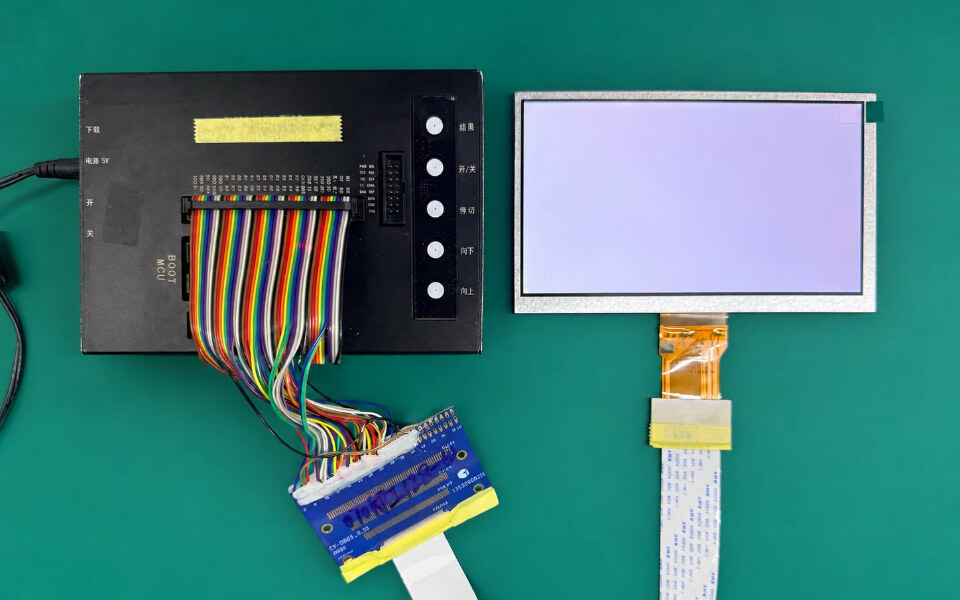
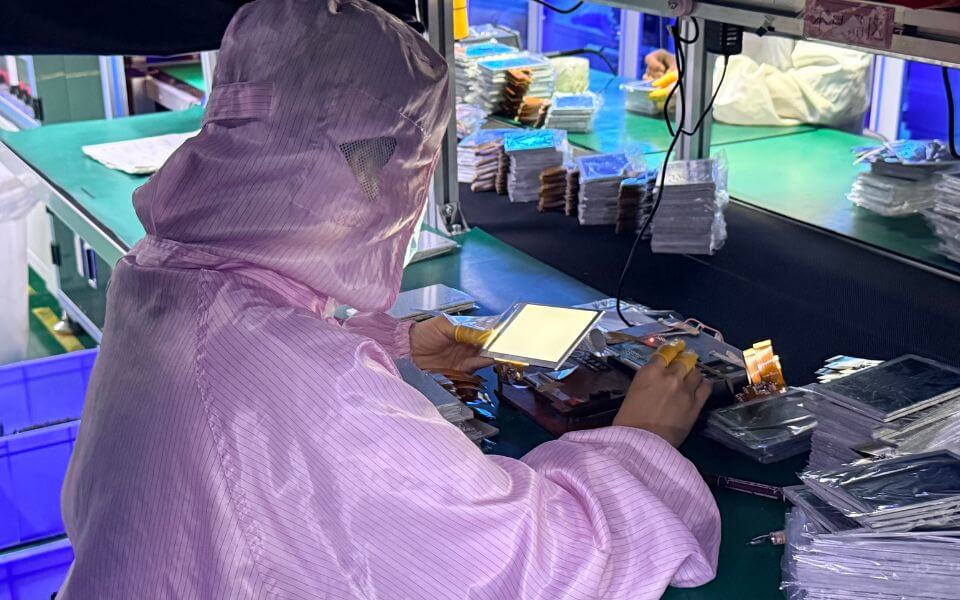
Test the chosen module with its actual driver, firmware, touch controller, power supply, cover stack, and enclosure. Observe startup, image stability, brightness, touch response, and recovery after relevant temperature exposure. Confirm the test profile against the product’s intended use and applicable customer requirements. MAXEN can review the display dimensions, interface, mounting, and thermal conditions for an OEM project, while final operating limits should be confirmed against the selected model documentation and engineering validation rather than generalized across a product family.