How Does MAXEN Prepare Standard LCD Samples and Custom Prototypes?
LCD screen prototyping and sample development allow OEM manufacturers to move from an agreed display solution toward physical product evaluation. After the technical configuration and commercial arrangements are confirmed, MAXEN prepares standard LCD samples or develops customized prototypes according to the project requirements.
The sample development process depends on whether the customer selects an existing LCD module or requires modifications to the display assembly. Standard products can proceed through sample ordering and shipment, while customized projects may involve detailed drawing approval, component preparation, engineering development, and prototype assembly.
At this stage, the objective is to provide samples that represent the agreed configuration and can be used for subsequent electrical, optical, mechanical, and system integration evaluation.
Standard LCD Module Sample Arrangement
For OEM projects that can use an existing MAXEN LCD model, sample preparation begins with confirming the selected product and the agreed sample order.
Standard TFT LCD modules have established product configurations, allowing customers to evaluate existing designs without initiating a new tooling process. This approach is suitable when the available display specifications meet the project's technical and mechanical requirements.
Before arranging shipment, MAXEN confirms the requested model number, sample quantity, applicable configuration, and delivery details. Where a customer requires a particular product revision or accessory, the availability of that configuration should also be verified.
Sample availability depends on the selected model and current inventory or production arrangements. Available standard samples can be prepared for shipment after the applicable pricing, payment, and order terms have been agreed.
Customers receive the samples for evaluation in their own hardware and application environment. This allows their engineering teams to examine practical compatibility before making decisions about future purchasing or volume production.
Although standard products do not require new product tooling, customers should still verify that the supplied configuration meets their electrical, optical, and mechanical requirements.
Confirming the Sample Configuration
Before a standard sample is shipped or a custom prototype is prepared, it is important to establish which product configuration the customer expects to receive.
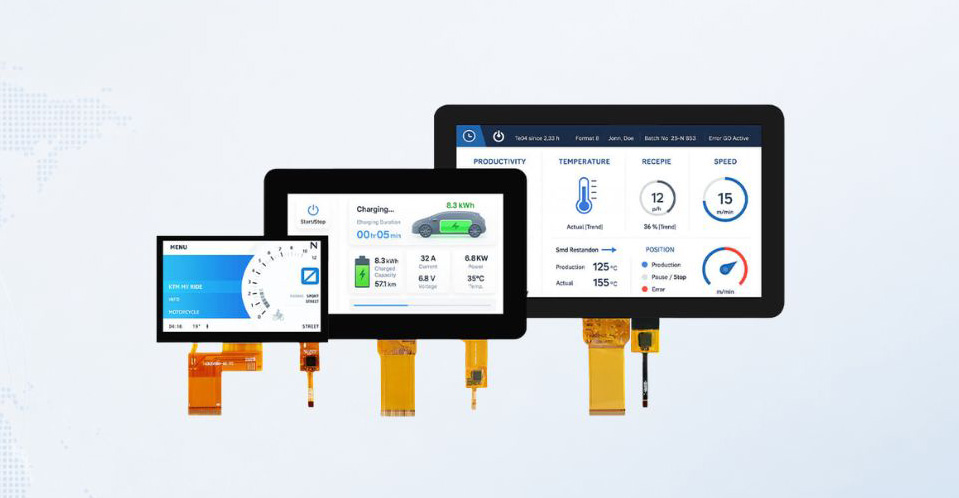
For an LCD module, the sample configuration may include screen size, resolution, display interface, brightness, FPC arrangement, connector type, and other model-specific characteristics.
For touchscreen assemblies, the configuration should also identify the required touch technology, touch controller, cover glass structure, and bonding method where applicable.
When customers are evaluating replacement displays, existing product drawings, connector details, and host system requirements can help confirm whether the selected sample is appropriate for their application.
For customized projects, the agreed specifications provide the basis for subsequent engineering drawings and prototype preparation.
Clear configuration identification is particularly important when several similar LCD models or design revisions are being evaluated. Differences in FPC pin assignments, backlight driving requirements, or mechanical dimensions can affect how a sample operates in the customer's equipment.
MAXEN works with customers to clarify the intended sample configuration before preparation, reducing the possibility of evaluating a module that differs from the proposed solution.
Engineering Drawings and Design Approval
Customized LCD prototypes require an agreed technical design before physical sample development begins. This helps ensure that the prototype reflects the customer's intended electrical, optical, and mechanical requirements.
Depending on the project, engineering drawings may describe the LCD outline dimensions, active area, FPC layout, connector position, cover glass dimensions, touch panel structure, or other customized features.
For projects involving new tooling, MAXEN first confirms the applicable engineering scope, tooling charges, and payment arrangements with the customer. Under the agreed tooling-based development process, detailed engineering drawings are issued after the required tooling payment.
The drawings are then submitted for customer review. Both parties examine the proposed design and resolve any outstanding dimensional, structural, or connection requirements before signing off on the applicable drawings.
For customized configurations that do not require new tooling, drawing preparation and approval follow the agreed engineering arrangements for the project.
Drawing approval is an important control point because the confirmed design establishes the reference for prototype preparation. It helps reduce misunderstandings about which specifications are fixed and which details remain subject to further evaluation.
If revisions are requested during the approval process, updated drawings should be reviewed before proceeding. The approved drawing revision then becomes the reference for developing the corresponding samples.
Tooling and Development Preparation
Not every customized LCD module requires new tooling. The development preparations depend on which components or structures need to be modified and whether existing manufacturing resources can support the proposed configuration.
For example, changes to an FPC layout may require additional circuit design and fabrication preparation. A customized backlight structure may involve LED light bar design, optical component selection, or dedicated assembly arrangements.
Special cover glass dimensions, touch panel structures, or mechanical configurations may require tooling, fixtures, or other project-specific preparation.
After the applicable design and commercial approvals are completed, MAXEN coordinates the necessary engineering and material preparations for prototype development.
This may include arranging customized components, confirming fabrication requirements, preparing relevant process instructions, and checking that the required materials are available for the planned sample build.
For projects involving several customized components, their preparation schedules must be considered together. A prototype cannot be completed until the necessary parts and approved design information are available.
The purpose of this stage is to establish the conditions needed to produce the agreed prototype, rather than beginning fabrication with unresolved technical requirements.
Preparing Customized FPC and Backlight Components
FPC configuration and backlight performance are common areas of customization in LCD module projects. Their development may require coordination between electrical design, mechanical requirements, and component preparation.
For customized FPC designs, engineers work from the approved electrical and mechanical requirements. Relevant considerations include pin assignments, routing layout, cable length, connector placement, and connection to the host system.
These details must remain consistent with the intended display interface and the customer's installation requirements.
Backlight customization may involve LED selection, light bar design, optical film configuration, and backlight assembly requirements.
MAXEN's in-house backlight engineering capabilities support the development of applicable customized backlight configurations. The proposed design may need to account for brightness targets, power consumption, thermal conditions, and available space within the LCD module.
For example, increasing backlight brightness can affect electrical driving requirements and heat generation. These considerations need to remain consistent with the configuration agreed during engineering review.
Customized FPC and backlight components are prepared according to the approved design and the manufacturing processes required for the prototype.
The completed components are then available for integration into the sample assembly, where the overall configuration can be checked before customer evaluation.
Sample Quantities and Development Scheduling
Sample quantities and development schedules should reflect the intended evaluation activities and the complexity of the selected LCD configuration.
For standard products, sample arrangements depend on product availability, order quantity, and shipment requirements. Where samples are available, they can be arranged without a new product development cycle.
Customized prototypes require additional preparation. Their schedules may depend on drawing approval, tooling arrangements, component fabrication, specialized materials, and assembly requirements.
Projects involving customized FPC designs, cover glass, touch integration, or optical bonding may require coordination across several component and assembly activities.
Customers should communicate their intended sample quantity and target evaluation schedule as early as possible. This helps MAXEN assess material requirements and establish suitable preparation arrangements.
Sample development lead times are confirmed according to the actual project scope. They should not be assumed to be identical for all standard or customized LCD modules.
When design changes or material constraints affect the preparation schedule, the relevant adjustments need to be discussed before the customer plans subsequent testing or approval activities.
LCD Prototype Assembly and Sample Handover
After the required drawings, components, and development arrangements are confirmed, custom LCD projects move into physical prototype preparation. Depending on the configuration, this may involve LCD module assembly, customized backlight integration, touch panel preparation, or optical bonding.
MAXEN prepares samples according to the agreed technical requirements and the available manufacturing processes. Initial checks help identify visible or functional issues before samples are released for customer evaluation.
The sample development stage concludes with the preparation and handover of the agreed samples. Detailed customer testing, formal acceptance criteria, and production approval are addressed in the subsequent validation stage.
Building LCD Module Prototypes
Custom LCD module prototypes are assembled according to the approved technical configuration. The required components and operations depend on the display structure and the modifications involved.
For an LCD module project, prototype preparation may include the integration of the LCD panel, driver connections, backlight components, FPC, and other relevant module parts.
MAXEN's LCD manufacturing capabilities include backlight assembly, COG/FOG bonding, and LCD module assembly. Applicable operations are selected according to the specific prototype design rather than applied identically to every sample.
When the project modifies an existing LCD platform, engineers may use suitable established components alongside newly prepared customized parts. This can help maintain consistency with the proposed configuration while focusing development work on the required changes.
During prototype preparation, assembly personnel follow the relevant drawings and process requirements. Particular attention is given to component orientation, connector arrangements, mechanical fit, and the integration of customized parts.
The resulting prototype provides a physical representation of the proposed display solution for further engineering evaluation.
At this point, the sample is not automatically considered approved for volume production. Its performance and compatibility must still be evaluated against the customer's requirements.
Touch Panel Integration and Optical Bonding
For projects requiring integrated touchscreen displays, sample development may involve additional preparation beyond the LCD module itself.
The required touch structure depends on whether the project uses a capacitive or resistive touch panel, as well as the intended cover glass, touch controller, and mechanical configuration.
Capacitive touch projects may require customized sensor dimensions, FPC layouts, touch IC configurations, or cover glass structures. These elements must be considered alongside the LCD module dimensions and the customer's system integration requirements.
When optical bonding is specified, MAXEN can evaluate applicable OCA or OCR bonding processes for the proposed display assembly.
Bonding preparation depends on the LCD, touch panel, and cover glass configuration, including relevant dimensions, optical requirements, and assembly compatibility.
For projects involving customized cover glass or touch panel components, the appropriate parts must be prepared before the complete touchscreen prototype can be assembled.
The objective is to provide a prototype that represents the intended LCD and touch configuration, allowing the customer to evaluate both display performance and touch interaction in the target equipment.
Not every LCD project includes touch integration or optical bonding. These operations are performed where they form part of the agreed product configuration.
Initial Functional Checks and Sample Identification
Before samples are released for shipment, applicable preliminary checks help determine whether they are suitable for customer evaluation.
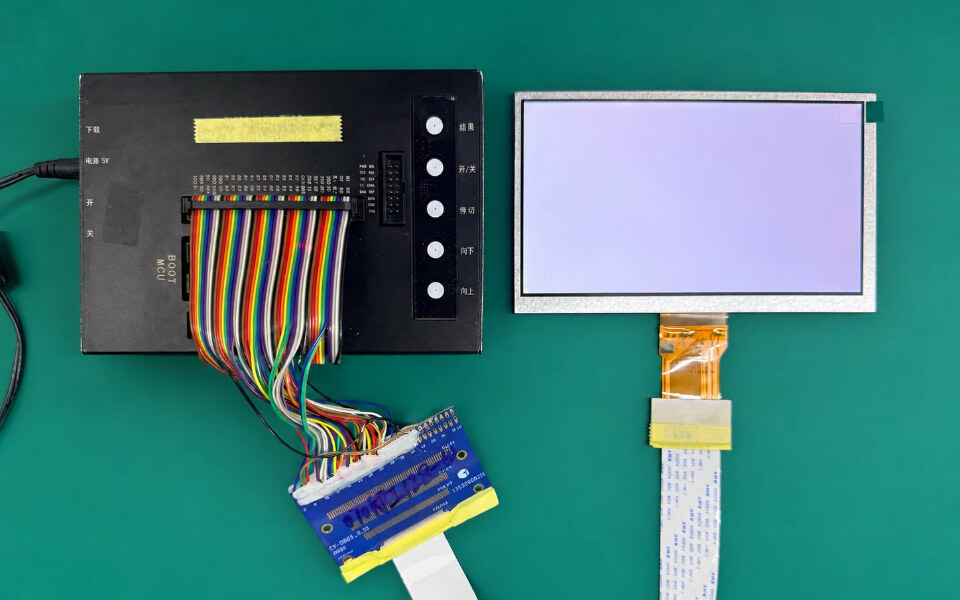
For LCD modules, these checks may include visual inspection, display power-on, image output, connection verification, and examination of relevant mechanical features.
Where touch functionality is included, initial checks may also cover touch response and basic communication with the applicable controller.
The checks performed depend on the sample configuration, available test arrangements, and the requirements defined for the project.
For customized prototypes, identifying the correct sample revision is also important. Model information, drawing revisions, or other agreed configuration references can help distinguish one prototype version from another.
This becomes particularly useful when a project involves multiple sample builds or adjustments to FPC, backlight, cover glass, or touch panel design.
The purpose of these preliminary checks is to identify obvious assembly or functionality issues before delivery. They do not replace the more extensive electrical, optical, environmental, or system-level testing that may be required during formal sample validation.
Any relevant sample limitations or outstanding items should be communicated when they may affect the customer's evaluation.
Sample Packaging and Shipment
LCD samples require suitable protection during handling and transportation, particularly because display glass, FPC connections, and exposed electronic components may be vulnerable to mechanical damage or improper handling.
MAXEN selects packaging arrangements according to the module structure, sample quantity, and transportation requirements.
Depending on the product, packaging may include individual protective bags, cushioning materials, compartmentalized cartons, or other suitable protective measures.
Special attention may be needed for samples with extended FPC cables, exposed connectors, customized cover glass, or integrated touch assemblies.
Before shipment, the sample quantity, product identification, and relevant delivery information are checked against the applicable order arrangements.
Where necessary, the shipment can be accompanied by available product specifications, drawings, or other agreed technical references to support customer evaluation.
Customers should ensure that the receiving engineering team can identify the supplied sample and the corresponding technical configuration.
Suitable packaging and clear product identification help reduce transportation risks and avoid confusion between different LCD models or prototype revisions.
Customer Integration and Prototype Feedback
After receiving the samples, customers can begin evaluating how the LCD module or touchscreen assembly fits and operates within their equipment.
Initial integration may involve connecting the display to the host board, checking interface communication, reviewing the displayed image, and confirming the physical fit within the enclosure.
For touchscreen projects, engineers may also evaluate touch controller communication, cover glass alignment, and the interaction between the touch panel and the host system.
These activities can reveal differences between the expected configuration and actual integration conditions. For example, a display may require further review of initialization settings, connector orientation, backlight driving, or installation clearance.
Customers are encouraged to provide clear feedback supported by photographs, test observations, connection diagrams, or relevant measurement results when issues are identified.
MAXEN can review the reported information and discuss whether the issue relates to the sample configuration, system integration, or a requirement that needs further clarification.
Early feedback helps engineering teams identify what should be addressed before the project advances to formal sample approval.
Moving Forward to Sample Testing & Approval
The completion of sample preparation marks an important milestone, but it does not by itself authorize volume production.
For standard LCD modules, customers evaluate the supplied product against their application requirements and confirm whether the existing configuration is acceptable.
For customized prototypes, the customer reviews the physical sample against the agreed drawings, specifications, and intended operating conditions.
If issues are identified, the relevant findings need to be discussed. Depending on their nature, further technical clarification, design adjustments, or revised samples may be necessary.
Any modifications should be documented and reflected in the applicable configuration or drawing revision so that subsequent evaluations refer to the correct design.
When the samples are ready for formal validation, the project proceeds to STEP 05 — Sample Testing & Approval.
During that stage, the customer and MAXEN review applicable test results, confirm the approved specifications and drawings, and establish the relevant acceptance criteria before authorizing mass production.
This separation between prototype preparation and final sample approval helps ensure that production decisions are based on an evaluated and agreed product configuration.