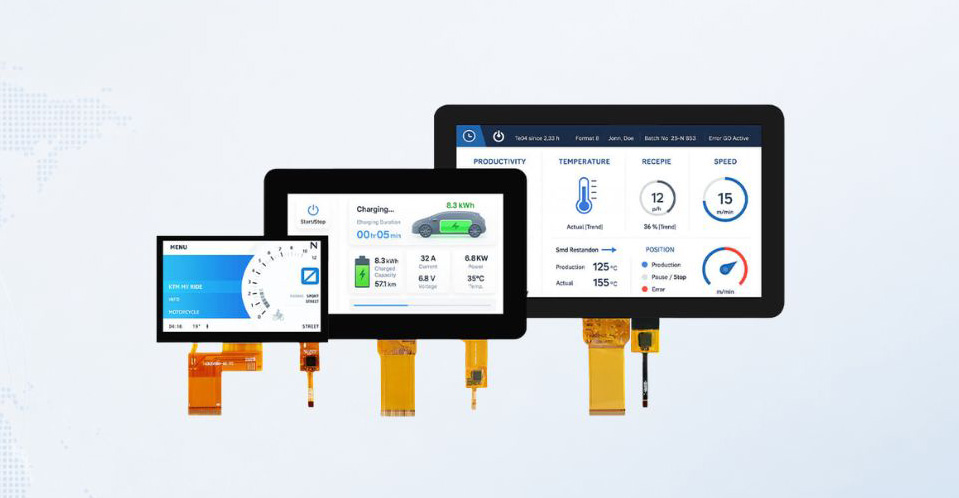
How Does MAXEN Control LCD and Touch Panel Quality During Manufacturing?
LCD display quality control begins before the module reaches final inspection. Material condition, bonding accuracy, backlight assembly, electrical connections, and touch panel integration can all influence the performance and consistency of finished display products.
MAXEN follows a quality control process covering Incoming Quality Control (IQC), In-Process Quality Control (IPQC), Final Quality Control (FQC), applicable aging tests, and Outgoing Quality Control (OQC). These inspection stages help identify material defects, monitor manufacturing operations, and verify completed modules against the relevant product specifications.
For standard TFT LCD modules, established product requirements provide the inspection reference. Customized LCD and touchscreen projects may involve additional checks based on approved drawings, electrical configurations, optical performance requirements, and customer-specific acceptance criteria.
Quality Requirements and Inspection References
Effective LCD display inspection requires clear specifications and defined acceptance criteria. Before production begins, relevant quality requirements should be established according to the approved product configuration.
For standard LCD modules, inspection references may include the applicable product datasheet, mechanical drawings, electrical specifications, and established inspection requirements.
Customized projects require additional attention to customer-approved design details. These may include FPC dimensions, connector arrangements, backlight characteristics, touch panel specifications, cover glass structures, and optical bonding requirements.
Inspection criteria can differ between products. For example, acceptable display appearance characteristics may depend on the active viewing area, pixel defect requirements, inspection conditions, and customer application.
Mechanical tolerances must also correspond to the approved drawing rather than a general dimension standard applied to every LCD module.
For applications requiring specific reliability or environmental performance, relevant testing requirements should be confirmed before production. These may involve additional evaluation beyond routine manufacturing inspections.
MAXEN uses applicable technical documents and inspection requirements to support quality checks throughout manufacturing.
When a design revision changes critical product characteristics, the corresponding inspection references should be reviewed to ensure that the production and quality teams are evaluating the intended configuration.
Clear inspection requirements help reduce differences in judgment and provide a consistent basis for identifying conforming and nonconforming products.
Incoming Quality Control (IQC)
Incoming Quality Control (IQC) is the inspection stage for materials and components received before they enter the manufacturing process.
TFT LCD module manufacturing relies on several types of supplied materials, including LCD panels, driver ICs, flexible printed circuits (FPCs), LEDs, optical films, backlight components, connectors, and mechanical parts.
Touchscreen projects may also require touch sensors, cover glass, controller components, and optical bonding materials.
The purpose of IQC is to verify that incoming materials correspond to the required specifications and to identify apparent quality problems before the components are used in production.
Depending on the material, inspections may involve product identification, dimensions, appearance, electrical characteristics, packaging condition, or other relevant requirements.
For LCD glass and optical materials, surface contamination, scratches, damage, or incorrect specifications can affect subsequent manufacturing operations.
For FPCs and electrical components, the correct configuration, connection details, and material condition are important to ensure compatibility with the intended LCD module.
LEDs and backlight components may require verification of relevant optical or electrical characteristics according to their procurement specifications.
Materials that do not meet the applicable acceptance requirements should be identified and handled according to the relevant quality procedures rather than introduced directly into production.
Incoming inspection helps prevent material-related problems from progressing into bonding, assembly, and other downstream operations.
The actual inspection items and inspection extent depend on the component type, material requirements, and applicable quality plan.
In-Process Quality Control (IPQC)
In-Process Quality Control (IPQC) focuses on detecting and controlling problems during manufacturing rather than relying only on the inspection of completed LCD modules.
Different production operations create different quality risks. Glass preparation requires careful handling and cleanliness control, while COG/FOG bonding depends on alignment and appropriate bonding conditions. Backlight assembly and touch panel integration introduce additional optical and mechanical considerations.
MAXEN applies relevant in-process checks to monitor manufacturing activities and identify potential abnormalities before assemblies move to subsequent operations.
Depending on the production stage, these checks may involve component positioning, equipment operating conditions, assembly appearance, bonding alignment, or preliminary functional characteristics.
For operations involving precise connections, the relationship between process parameters and product specifications is especially important.
A deviation in alignment, material positioning, or bonding conditions may affect the reliability of an electrical connection even when the problem is not immediately visible.
During assembly, improper component placement or contamination can also influence the final display appearance and optical uniformity.
In-process checks help identify these issues closer to the operation where they occur, making it easier to investigate the relevant process and materials.
For customized modules, IPQC must also consider the correct drawing revision and component configuration. Products that share similar dimensions may still have different FPC connections, backlight arrangements, or touch structures.
The inspection method and frequency depend on the process, the applicable control requirements, and the product configuration.
COG/FOG Bonding and FPC Connection Inspection
COG and FOG bonding are important manufacturing operations because they establish electrical connections between the LCD glass, driver components, and flexible circuits.
Chip-on-Glass (COG) bonding attaches the appropriate driver IC directly to the LCD glass. Film-on-Glass (FOG) bonding connects the corresponding flexible circuit or film connection structure to the designated glass contact area.
These processes commonly use anisotropic conductive film (ACF) to establish electrical connections between corresponding contact points while maintaining separation between adjacent circuits.
Bonding quality depends on factors such as component alignment, contact positioning, material condition, and the applicable bonding temperature, pressure, and time.
During manufacturing, relevant checks help evaluate whether the bonded components correspond to the approved configuration and whether visible or functional abnormalities are present.
Improper bonding alignment, contamination, or unsuitable process conditions can contribute to connection defects, abnormal display lines, intermittent signals, or other functional problems.
For customized FPC designs, the inspection reference must also reflect the approved pin assignments, cable structure, and connector configuration.
A correctly bonded FPC must match both the electrical design and the intended mechanical arrangement.
Where applicable, bonding-related checks may be supported by functional testing or other inspection methods suited to the connection structure.
The exact inspection techniques and acceptance requirements depend on the selected LCD panel, bonding materials, and production specifications.
By controlling these connection processes, MAXEN aims to identify bonding-related problems before the LCD module proceeds through later assembly and final testing.
Backlight and LCD Module Assembly Inspection
Backlight quality affects LCD brightness, illumination uniformity, appearance, and the operation of the finished display module.
A typical TFT LCD backlight assembly may contain LEDs, light guide plates, reflector materials, diffuser films, brightness enhancement films, and supporting mechanical components.
These parts must be arranged according to the approved backlight design. Component orientation, alignment, cleanliness, and proper handling are important to achieve the intended assembly characteristics.
During backlight preparation, applicable inspections may address the condition and placement of LED light bars, optical films, light guide components, and the supporting structure.
Incorrect optical film positioning, contamination, or mechanical interference may contribute to visible brightness irregularities, local bright areas, or other appearance defects.
For customized backlights, the correct LED and light bar configuration must also correspond to the approved product requirements.
When the prepared LCD panel is integrated with the backlight unit, additional checks may focus on mechanical fit, alignment, FPC routing, and the condition of the assembled module.
The active LCD display area should align with the intended backlight structure, while the supporting components must fit within the specified module dimensions.
Improper assembly pressure, component displacement, or foreign particles can affect the appearance and performance of the finished LCD module.
MAXEN follows the applicable assembly requirements and uses relevant checks to identify manufacturing abnormalities.
After module assembly, functional inspection can help determine whether the display powers on and produces the expected image output under appropriate test conditions.
Detailed final display testing takes place during the subsequent FQC stage.
Touch Panel Processing and Optical Bonding Inspection
Touch panels introduce additional quality considerations because the sensor, cover glass, controller connections, and bonding structure must operate together with the LCD module.
For projected capacitive touch panels, relevant manufacturing requirements may include sensor appearance, FPC connections, touch controller configuration, cover glass dimensions, and assembly alignment.
Depending on the design, processing operations may involve glass cutting, cleaning, drying, sensor preparation, and lamination.
During these operations, cleanliness and correct component positioning are important. Contamination, surface damage, or incorrect alignment may affect the appearance and functionality of the finished touch panel.
For customized touch panels, the approved dimensions, FPC layout, connector arrangement, and controller requirements provide the applicable inspection reference.
When a touch panel or cover glass is optically bonded to an LCD module, additional quality checks may be required.
OCA film bonding and OCR bonding involve different materials and process requirements, but both depend on suitable component preparation and alignment.
Optically bonded assemblies may be inspected for visible bubbles, contamination, bonding irregularities, or misalignment according to the agreed appearance requirements.
The acceptable limits depend on the product design, inspection conditions, and customer specifications.
Touch panel processing and optical bonding quality cannot be evaluated solely from the external appearance of a completed display. Applicable touch functionality and electrical compatibility must also be verified.
MAXEN's touch panel production and integration operations therefore require coordination between process-related checks and subsequent functional inspection.
Not every LCD module includes a touch panel or optical bonding. These checks apply when the relevant processes form part of the product configuration.
Final Inspection, Aging Tests, and Quality Release
After manufacturing and assembly, completed LCD modules and touch panels undergo the applicable final verification activities before being approved for shipment preparation.
This stage evaluates whether the finished products meet the relevant appearance, electrical, optical, and functional requirements. Depending on the configuration, inspection may also include touchscreen functionality, bonding quality, and environmental or aging-related checks.
MAXEN's final quality activities include FQC, applicable aging tests, and OQC. Products that do not meet the specified requirements must be addressed before release.
The inspection criteria follow the applicable model specifications and agreed customer requirements rather than assuming that every LCD display or touch panel has identical acceptance limits.
Final Quality Control (FQC)
Final Quality Control (FQC) evaluates completed LCD modules or touchscreen assemblies after the required manufacturing operations have been performed.
Unlike inspections focused on individual materials or production steps, FQC considers the assembled product as a complete unit.
The inspection may cover the visible condition of the module, its functional operation, electrical connections, display appearance, mechanical characteristics, and any relevant touchscreen features.
For TFT LCD modules, inspectors may examine the polarizer surface, display area, backlight appearance, FPC, connector, frame, and accessible assembly areas.
Visible abnormalities such as scratches, contamination, assembly damage, or incorrect positioning are assessed against the applicable product appearance requirements.
Functional checks help determine whether the display powers on correctly and produces the expected output under the specified test conditions.
For customized modules, the product model and relevant revision information should correspond to the approved configuration.
When the assembly includes a touch panel or cover glass, additional checks may address touch functionality, mechanical alignment, and the appearance of the completed structure.
The final inspection requirements depend on the selected product and the inspection criteria agreed for the project.
Passing FQC indicates that the inspected product has satisfied the applicable checks performed at this stage. It does not eliminate the need for any subsequent aging, outgoing inspection, or customer-specific verification required by the project.
LCD Display Functional and Optical Inspection
LCD display function and appearance are important parts of final quality inspection because many potential defects become visible when the module is powered and displaying test images.
MAXEN uses applicable display testing arrangements to examine image output and identify visible abnormalities in finished TFT LCD modules.
Depending on the product, functional checks may include power-on behavior, interface-related operation, backlight illumination, and the display of appropriate test patterns.
Solid-color images, grayscale patterns, and other test content can help reveal defects such as abnormal lines, missing image areas, bright or dark spots, color irregularities, or uneven illumination.
Different patterns can make different problems easier to identify. A defect that is not obvious against one image may become more visible under another display condition.
Surface inspection is also important. Scratches, contamination, polarizer damage, and other appearance defects must be assessed under suitable inspection conditions.
Pixel-related defects require particular attention because the number, location, and classification of acceptable defects may vary by product and customer specification.
Optical properties such as brightness, uniformity, contrast, or color characteristics may also require measurement or sampling according to the applicable inspection plan.
For high-brightness modules, relevant checks may include the expected backlight output and its compatibility with the specified electrical driving conditions.
A visible display check should not be confused with a complete optical characterization. Quantitative measurements require appropriate equipment, defined conditions, and agreed acceptance limits.
The objective is to confirm that the completed LCD module meets the functional and appearance requirements applicable to its approved configuration.
Touch Panel Full Inspection and Functional Verification
Touch panel quality is particularly important for equipment where the display serves as the primary user interface.
MAXEN carries out full inspection of touch panels before shipment, checking the relevant product characteristics and functionality according to the applicable configuration.
For capacitive touch panels, inspection may include the sensor appearance, cover glass condition, FPC connection, and touch response using suitable test equipment.
Functional checks can help identify missing touch response, abnormal coordinate behavior, or other problems associated with the sensor and controller arrangement.
Where required by the product specification, additional checks may address touch response across the active area, controller communication, or supported touch functions.
For resistive touch panels, the applicable functional evaluation differs because the sensing technology operates through a different physical mechanism. Relevant checks should correspond to the approved resistive touch configuration.
For integrated touchscreen displays, inspection may also include the relationship between touch coordinates and the displayed image.
Touchscreen assemblies with cover glass or optical bonding require the applicable appearance and alignment checks in addition to touch functionality.
Inspection should follow the actual product requirements. Special operating conditions such as glove use, moisture exposure, or application-specific performance are not automatically included in every routine touch panel inspection.
Full inspection also does not mean that every optional environmental or reliability qualification is performed on each touch panel. Such tests follow the applicable project requirements and testing arrangements.
By checking touch panel appearance and function before release, MAXEN helps identify nonconforming units before they proceed to customer delivery.
Aging Tests and Reliability Requirements
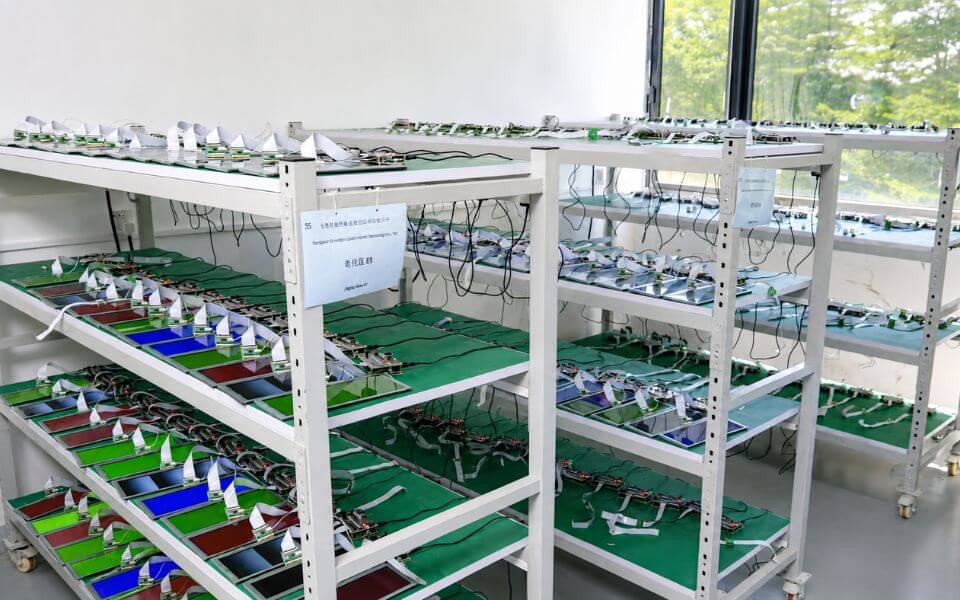
Aging tests are used to observe the operation of LCD modules over a defined period under specified conditions.
MAXEN operates LCD module aging stations as part of its applicable quality verification arrangements.
During an aging test, modules may be powered and operated using the required electrical configuration while their performance is observed according to the relevant testing procedure.
These tests can help identify certain abnormalities that may not become apparent during a short initial power-on check, such as intermittent display behavior, unexpected lines, or changes in image output.
The test duration, operating mode, temperature, and other conditions depend on the product and applicable requirements.
Aging tests should not be confused with complete product lifetime testing. Passing a defined aging procedure indicates that the tested unit met the requirements under those conditions, not that it has been proven to operate without failure throughout its entire service life.
Some OEM applications may require additional reliability evaluation beyond routine aging.
For example, wide-temperature LCD modules may need verification at specified operating temperature limits, while equipment intended for demanding environments may require humidity, vibration, thermal cycling, or other project-specific testing.
Such evaluations may be conducted on defined samples rather than every unit, depending on the agreed qualification plan.
Environmental and reliability test requirements should be established according to the intended application, product specifications, and customer acceptance criteria.
MAXEN reviews applicable aging and reliability requirements as part of the quality process, helping ensure that the agreed evaluation activities are completed before the product is released.
Nonconforming Product Control and Reinspection
Quality control also requires a defined approach for products that do not meet the applicable inspection requirements.
Potential nonconformities may be identified during incoming material inspection, bonding operations, module assembly, final testing, or outgoing quality checks.
Examples include incorrect components, visible assembly defects, abnormal display output, connection issues, or touchscreen functionality that does not meet the relevant requirements.
When a potential defect is found, the affected material or product must be identified so it is not mistakenly treated as an accepted unit.
The appropriate disposition depends on the nature of the problem, the product structure, and the applicable quality procedures.
Some issues may be suitable for authorized correction or rework, while others may require replacement, rejection, or further engineering evaluation.
A product should not be assumed to meet its original specification after rework without appropriate verification.
When a defect affects an electrical connection, display appearance, touch function, or mechanical configuration, the relevant characteristics may need to be inspected or tested again.
Repeated or unusual defects may also indicate the need to investigate materials, equipment settings, process conditions, or design information.
Identifying the likely cause helps determine whether the issue is isolated or may affect other units from the same manufacturing activity.
Where applicable, inspection findings and corrective actions can support future production improvements and customer quality discussions.
The objective is to prevent products with unresolved nonconformities from proceeding to shipment as accepted material.
Outgoing Quality Control (OQC)
Outgoing Quality Control (OQC) provides the quality release checkpoint before accepted products proceed to the final packing and shipment process.
While FQC focuses on the completed product and applicable functional characteristics, OQC helps verify that the products being released correspond to the correct order and meet the relevant outgoing requirements.
The inspection may involve checking the product model, configuration, quantity-related identification, appearance condition, and applicable quality status.
For customized LCD modules, the correct model and design revision are especially important. Modules with similar dimensions may have different FPC connections, backlight characteristics, or touch panel configurations.
OQC helps reduce the risk of releasing products with the wrong configuration or unresolved quality status.
Depending on the project requirements, outgoing checks may also include a review of relevant inspection results, labels, or other release information.
Products requiring additional verification should not proceed as accepted goods until the relevant requirements have been satisfied.
For touch panels and integrated display assemblies, outgoing release must reflect the applicable touch inspection results as well as the agreed product configuration.
The scope of OQC is determined by the product and the applicable quality procedures.
Once the required checks are completed and the products are accepted for release, the shipment can proceed to the appropriate protective packaging and delivery preparation activities.
Quality Records and Customer-Specific Acceptance Criteria
Quality records help connect the inspection process with the product configuration and the requirements used to determine acceptance.
For standard LCD modules, inspection references may include the applicable product specifications, manufacturing information, and established quality criteria.
Customized projects may require additional records associated with approved drawings, design revisions, sample approval, or customer-defined inspection requirements.
Depending on the product and quality plan, relevant records may include inspection results, test observations, production identification, or documentation of nonconforming material.
These records can help clarify which configuration was inspected and what requirements were applied.
For OEM customers, the availability of relevant quality documentation can be useful during supplier evaluation, incoming inspection planning, and investigation of reported product issues.
However, the level of documentation and the information available for external review depend on the project arrangements and confidentiality requirements.
Customer-specific acceptance criteria should be discussed before production when they differ from the standard product requirements.
For example, a customer may specify particular pixel defect limits, optical measurements, dimensional tolerances, touch functionality, or reliability validation conditions.
Such requirements should be evaluated for technical feasibility and reflected in the applicable agreement before being treated as production acceptance criteria.
MAXEN can discuss relevant quality information and available inspection documentation with customers according to their project needs.
Clear alignment between product specifications, inspection criteria, and available records helps engineering and purchasing teams evaluate product quality with greater confidence.
Moving Forward to Packing & Delivery
Quality inspection concludes with the release of products that meet the applicable acceptance requirements.
Before shipment preparation, the completed modules should correspond to the agreed specifications and product configuration, with any required inspections or tests completed.
For standard TFT LCD modules, this means confirming the accepted product model and its relevant inspection status.
For customized displays and touchscreen assemblies, the release process must also account for the approved configuration and any applicable customer-specific quality requirements.
If unresolved quality issues remain, the affected products require appropriate handling rather than being included in accepted shipments.
Once the relevant quality checks have been completed and the products are approved for release, the project proceeds to STEP 08 — Packing & Delivery.
At that stage, MAXEN prepares suitable protective packaging, verifies the applicable shipping information, and arranges the agreed delivery procedures.
LCD glass, polarizer surfaces, FPC connections, and touch assemblies require appropriate handling and protection during packing and transportation.
The quality release stage therefore establishes the transition from manufacturing verification to shipment preparation.
Through incoming inspection, in-process checks, final testing, applicable aging, and outgoing quality control, MAXEN supports the delivery of LCD modules and touch panels that meet their agreed product requirements.