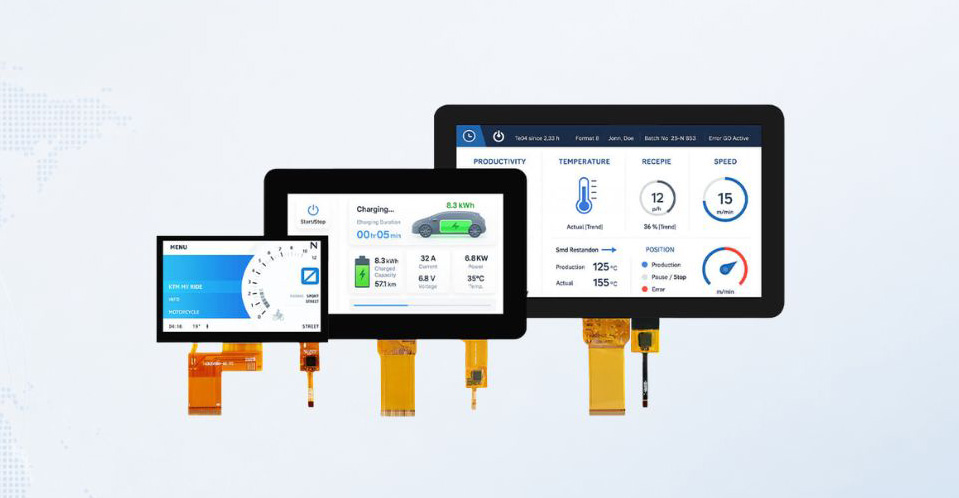

What Information is Needed for an LCD Display Project?
Clear LCD display requirements help establish a suitable starting point for product selection and customization. MAXEN works with OEM manufacturers, engineers, and purchasing teams to understand the intended application, display performance, electrical connections, mechanical integration, and operating environment.
Not every specification needs to be finalized before submitting an inquiry. Existing drawings, reference models, or application information can help our team clarify technical requirements and identify areas that need further evaluation. The following information provides a practical starting point for standard LCD modules and customized display projects.
Display Size and Optical Performance
Display size and optical performance are among the first requirements to consider when selecting a TFT LCD module. Customers can specify the preferred screen size, resolution, display orientation, brightness, and viewing angle according to their equipment design and application.
Screen size alone does not determine whether a display will fit the intended product. Active area dimensions, outline dimensions, resolution, and viewing characteristics should also be considered. For projects replacing an existing display, providing the original model number or datasheet can help clarify these requirements.
Brightness and viewing performance depend on the installation environment. Indoor control panels may require moderate brightness, while outdoor equipment or displays exposed to direct sunlight may need high-brightness backlight configurations. IPS technology may also be preferred when wide viewing angles are important.
Customers should describe how and where the display will be used, especially when exact optical specifications have not yet been determined. This information helps establish appropriate performance targets for subsequent engineering evaluation.
Electrical Interface and FPC Requirements
Electrical compatibility is essential when integrating an LCD module with a customer's existing hardware. The selected display must be compatible with the host system's interface, electrical connections, and control requirements.
Common LCD interface options include RGB, LVDS, MIPI DSI, and SPI, depending on the display model. Customers can provide the required interface, connector type, pin assignments, power supply specifications, and available host controller information.
Flexible printed circuit (FPC) requirements are also important. FPC length, connector position, pin configuration, and cable exit direction can affect how the display connects to the main control board and fits within the equipment enclosure.
For projects requiring modified FPC layouts or connector arrangements, customers should provide relevant drawings or describe the installation constraints. Existing host board specifications and connection diagrams can help clarify these requirements before engineering review.
Touch Panel and Optical Bonding Requirements
Touch functionality should be identified during the initial project discussion, particularly when the display will serve as part of a human-machine interface (HMI) or interactive control system.
Customers should specify whether the project requires a standalone LCD module, capacitive touch panel integration, or resistive touch functionality. Touch controller compatibility and the preferred communication interface, such as I2C or USB where applicable, may also need to be considered.
For projects requiring cover glass, relevant information includes cover glass dimensions, thickness, printed borders, surface treatment, and mechanical integration requirements. Specific operating needs, such as glove operation or exposure to moisture, should also be identified when relevant.
Optical bonding may be considered when integrating the LCD module with a touch panel or cover glass. MAXEN supports OCA and OCR optical bonding options for applicable display assemblies. Customers can indicate their bonding preferences and installation requirements for further evaluation.
Providing these details early helps clarify the intended touchscreen configuration and reduces the risk of overlooking requirements that affect the final assembly.
Mechanical Dimensions and Mounting
Mechanical compatibility determines whether a display module can be installed correctly within the intended equipment. In addition to the nominal screen size, customers should consider overall dimensions, module thickness, active area position, mounting requirements, and available internal space.
For embedded equipment, the location of the FPC, connector orientation, and clearance around surrounding components can influence display integration. Projects involving cover glass or touch panels may also require attention to the relationship between the display outline, cover dimensions, and enclosure opening.
Mechanical drawings, enclosure designs, or existing product photographs can provide useful references. When available, 2D drawings or 3D models help communicate installation constraints and identify dimensions that must remain unchanged.
For replacement applications, matching screen size and resolution is not sufficient to establish mechanical compatibility. Outline dimensions, electrical connections, and mounting conditions should also be reviewed.
Application Conditions and Order Planning
The intended operating environment influences LCD module selection and the requirements considered during engineering evaluation.
Customers should describe expected operating temperatures, ambient lighting conditions, and relevant environmental exposure. Equipment used outdoors, near industrial machinery, or in applications involving temperature fluctuations may require additional consideration of thermal performance, electrical interference, or mechanical protection.
If the project involves specific environmental or reliability requirements, such as vibration resistance, humidity exposure, or long-term operation, these expectations should be communicated during the initial inquiry. Applicable testing requirements can then be discussed according to the project.
Commercial planning information is equally useful. Estimated prototype quantities, initial order volume, annual demand, and target production schedules help MAXEN understand the expected project scale.
For OEM equipment requiring continued production over several years, customers may also identify anticipated product lifecycle and supply continuity requirements. These details support future discussions about component availability, MOQ, and production planning.
Preparing Your Project for Engineering Review
After establishing the main technical requirements, the next step is to determine whether an existing LCD module can meet the application needs or whether a customized configuration should be evaluated.
MAXEN supports both standard and custom display projects. The information required for each project may differ, but clear specifications, reference materials, and defined priorities help engineering and purchasing teams communicate more efficiently.
Selecting Existing LCD Module
For projects that can use an existing display configuration, customers can begin by reviewing MAXEN's standard TFT LCD modules and identifying models with suitable specifications.
Providing a preferred model number, reference datasheet, or required specifications allows our team to compare the requested configuration with available products. Screen size, resolution, interface, brightness, viewing characteristics, and mechanical dimensions are important factors in this initial review.
For replacement projects, customers may provide the original display model or available technical documentation. Similar screen dimensions or resolution do not necessarily guarantee electrical or mechanical interchangeability, so relevant specifications still require confirmation.
When a potentially suitable model is identified, sample availability, product configuration, purchasing requirements, and further technical evaluation can be discussed before proceeding.
Defining Custom Display Requirements
Some projects require adjustments beyond the specifications of existing LCD modules. These requirements should be identified as clearly as possible before detailed engineering work begins.
MAXEN supports customization involving backlight configurations, LED light bar design, FPC layouts, interface arrangements, touch panel integration, cover glass, and optical bonding, subject to technical feasibility.
Customers can describe which specifications must be maintained and which features can be adjusted. For example, a project may require a specific module outline while allowing flexibility in backlight brightness or connector placement. Another project may prioritize optical performance while requiring a customized touch panel structure.
Distinguishing essential requirements from preferred features helps establish appropriate design priorities and identify potential alternatives during engineering review.
Customization does not automatically mean that new tooling is required. Engineering work, tooling requirements, and associated costs depend on the actual modifications and are evaluated during the subsequent project stages.
Technical Drawings and Reference Materials
Supporting documents help communicate requirements more accurately than written descriptions alone. Customers are encouraged to share available technical information when submitting an inquiry.
Useful references may include existing LCD datasheets, mechanical drawings, FPC layouts, connector specifications, host system information, and photographs of the intended application.
For touchscreen projects, cover glass drawings, touch panel specifications, and enclosure information can help clarify the intended assembly structure.
For replacement projects, documentation of the existing LCD module is particularly useful. Model numbers, product photographs, connector details, and original drawings may help identify compatibility requirements even when a complete datasheet is unavailable.
Customers do not need to prepare a complete engineering package before contacting MAXEN. Available documents can serve as a starting point, and missing information can be identified during the initial review. Confidential project materials should be shared through appropriate communication arrangements.
Confirming Requirements and Moving Forward
Once the initial project information is received, MAXEN reviews the submitted specifications and reference materials to clarify the intended display configuration and identify any missing or conflicting requirements.
Additional questions may concern electrical connections, installation dimensions, touch functionality, operating conditions, or expected order quantities. Resolving these points helps establish a clearer technical scope for engineering evaluation.
The objective at this stage is not to finalize the entire display design, but to establish a reliable understanding of the customer's application and essential requirements.
Customers can submit their requirements through the inquiry form and attach available drawings, datasheets, or reference materials. Our team will review the information and discuss the appropriate next steps.
Once the initial requirements are sufficiently defined, the project proceeds to STEP 02 — Engineering Review, where electrical compatibility, FPC design, mechanical integration, and customization feasibility are evaluated in greater detail.